

CT Angiogram — The Painless, Powerful Scan That Lets You See Inside Your Heart Without Surgery
Imagine being able to look inside your heart’s arteries — not with scalpels or catheters, but with a quick, painless scan that takes less than 15 minutes.That’s the magic of the CT Coronary Angiogram (often called Cardiac CTA). No hospital stay. No recovery time. No guesswork.
Whether you’re experiencing chest discomfort, have risk factors for heart disease, or simply want peace of mind — a CT angiogram can give you and your doctor crystal-clear answers… without ever breaking the skin. Let’s walk through what it is, why it matters, and how this revolutionary test is changing the way we detect — and prevent — heart disease
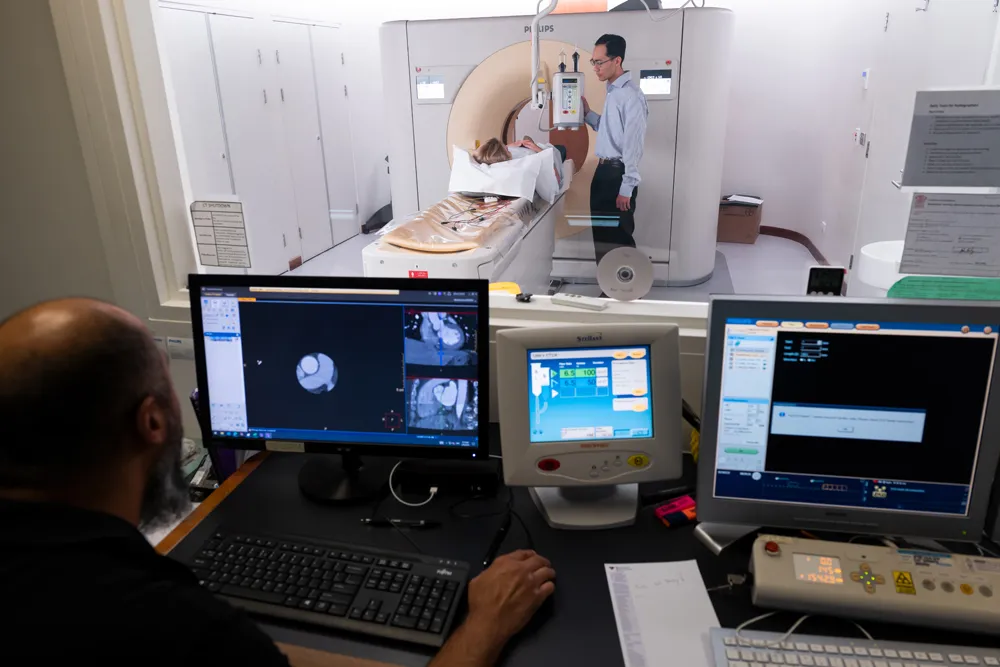
❤️ What Is a CT Coronary Angiogram?
A CT Coronary Angiogram (CTA) is a specialized type of computed tomography (CT) scan that uses X-rays and computer technology to create detailed, 3D images of your heart and its blood vessels — especially the coronary arteries that supply oxygen-rich blood to your heart muscle.
Unlike traditional angiography (which requires threading a catheter into your arteries), CTA is completely non-invasive. All it takes is an IV in your arm — and you’re done in minutes.
Think of it as a “virtual angiogram” — showing blockages, plaque buildup, and artery anatomy with remarkable precision… all from the comfort of a scanning table.
📊 Why Would You Need a CT Angiogram?
Your doctor may recommend a CT angiogram if you have:
🔸 Chest pain or pressure — especially if you’re at low-to-intermediate risk for heart disease
🔸 Unclear or abnormal stress test results
🔸 Strong family history of early heart attacks or sudden cardiac death
🔸 Unexplained shortness of breath — particularly with exertion
🔸 Planning for non-cardiac surgery (in select high-risk patients)
🔸 Wanting to assess your “plaque burden” — even without symptoms
It’s also increasingly used as a screening tool for: → Younger adults with risk factors (smoking, high cholesterol, diabetes)
→ Patients with atypical symptoms (especially women, whose heart disease often presents differently)
→ Anyone seeking early detection — before symptoms strike
The goal? To catch heart disease early — when lifestyle changes or medications can still make a dramatic difference.
🧪 How Does It Work? Step by Step
1. Preparation
- You may be asked to avoid caffeine and certain medications (like erectile dysfunction drugs) for 24 hours.
- Fasting isn’t always required — but follow your clinic’s instructions.
- An IV line will be placed in your arm for contrast dye.
2. Heart Rate Control
- For the clearest images, your heart rate should be slow and steady (ideally under 65 bpm).
- You may be given a beta-blocker pill or IV medication to lower your heart rate.
3. The Scan
- You’ll lie on a table that slides into the CT scanner — a large, doughnut-shaped machine.
- Electrodes are placed on your chest to sync the scan with your heartbeat (called ECG-gating).
- When ready, contrast dye is injected through your IV — you may feel a warm flush or metallic taste. This is normal.
- The scanner rotates around you, taking hundreds of X-ray images in seconds.
- You’ll be asked to hold your breath for 5–15 seconds to prevent motion blur.
⏱️ Total time in the scanner: Less than 5 minutes.
⏱️ Total appointment time: 30–60 minutes.
4. After the Scan
- The IV is removed.
- You can eat, drink, and drive immediately.
- Drink plenty of water to flush out the contrast dye.
- Results are typically reviewed by a cardiologist or radiologist within 24–48 hours.
🖼️ What Does a CT Angiogram Show?
Your doctor will look for:
🔶 Coronary Artery Blockages — Narrowing from plaque (calcified or soft) that could restrict blood flow
🔶 Plaque Composition — Is it stable (calcified) or vulnerable (soft/fatty) — which is more likely to rupture and cause a heart attack?
🔶 Anatomy Variants — Some people have unusual artery paths — important to know before procedures
🔶 Bypass Grafts or Stents — Can assess patency (if stents are larger than 3mm)
🔶 Other Findings — Aortic aneurysms, lung nodules, calcium scores (sometimes reported alongside)
One of the biggest strengths of CTA? Its “rule-out” power.
👉 If your CT angiogram is normal, the chance you have a significant blockage is less than 1%. That’s powerful reassurance.
🆚 CT Angiogram vs. Other Tests
Invasiveness | Non-invasive (IV only) | Invasive (catheter in artery) | Non-invasive |
Radiation | Low to moderate | Moderate | None (ECG) / Low (Nuclear) |
Contrast Dye | Yes (iodine-based) | Yes | Sometimes (nuclear) |
Accuracy | >95% sensitivity for ruling out CAD | Gold standard — 100% | 70–85% (varies by type) |
Treatment Possible? | ❌ Diagnostic only | ✅ Stents/angioplasty during same procedure | ❌ |
Best For | Low-intermediate risk, screening, unclear symptoms | High risk, known disease, acute symptoms | Functional assessment (blood flow under stress) |
👉 Bottom line: CTA is ideal when you need anatomical clarity — fast, safely, and without commitment to invasive procedures.
🚫 Risks? Very Low — But Good to Know
CT angiography is extremely safe for most patients. Potential considerations:
☢️ Radiation exposure — Comparable to a mammogram or abdominal CT. Modern scanners use dose-reduction techniques.
💧 Contrast dye — Rarely causes allergic reaction or kidney stress. Inform your doctor if you have kidney disease or prior reactions.
💊 Beta-blockers — May cause temporary lightheadedness or fatigue.
💡 Pro Tip: If you’ve had a prior reaction to contrast, pre-medication (steroids/antihistamines) can often prevent recurrence. Ask your care team.
🧑⚕️ What Happens After the Scan?
- Your images are reconstructed into stunning 3D models of your coronary arteries.
- A specialist interprets the findings and sends a report to your doctor.
- If normal: Huge relief — and often no further testing needed.
- If mild plaque: Time to double down on prevention — statins, diet, exercise.
- If moderate-severe blockage: Your doctor may recommend stress testing, invasive angiogram, or starting treatment.
Many patients say:
“I didn’t want to wait for a heart attack to find out I was at risk.”
“Seeing my own arteries on screen made me take my health seriously.”
“It saved me from an unnecessary cath.”
💬 Real Patient Story
“I’m 48, fit, no symptoms — but my dad died at 52 from a ‘widow-maker’ heart attack. My doctor ordered a CT angiogram ‘just to be sure.’ They found a 60% blockage in my LAD — the same artery that killed my dad. One stent later — and I’m alive because of that scan. Don’t wait for symptoms. Get checked.”
— Hamid, 48
✅ Final Thought
A CT coronary angiogram isn’t just a test — it’s a window into your future.
It doesn’t require bravery. It doesn’t demand recovery. It simply asks for 15 minutes of your time… to potentially save decades of your life.
In the battle against heart disease — the world’s #1 killer — early detection is your greatest weapon. And CT angiography puts that weapon directly in your hands.
So if your doctor suggests it — or if you have reason to wonder about your heart’s health — say yes.
See inside. Know your risk. Take control.
Your heart is waiting to show you what it needs.