

The Silent Watchdogs of Your Heart — Why Rhythm & Blood Pressure Monitoring Matter More Than You Think
Your heart doesn’t take breaks. It beats — steadily, silently, faithfully — over 100,000 times a day. But what if, in the middle of the night, it skips… or races… or pounds too hard? What if your blood pressure creeps up while you’re sleeping, or dips dangerously low without warning? You wouldn’t know — unless you’re being monitored.
Welcome to the world of Rhythm & Blood Pressure Monitoring — where tiny devices, smart algorithms, and quiet vigilance come together to catch what your annual checkup might miss. This isn’t science fiction. It’s modern preventive cardiology — and it’s changing lives.
🌙 Why “Silent” Symptoms Are So Dangerous
Many of the most threatening heart conditions don’t shout — they whisper.
- Atrial fibrillation (AFib) often comes and goes without symptoms — until it causes a stroke.
- Hypertension is called “the silent killer” for a reason — you can feel perfectly fine while it damages your arteries, kidneys, and heart.
- Nocturnal arrhythmias or asymptomatic pauses can lead to sudden collapse — or worse — with no prior warning.
- “White coat hypertension” or “masked hypertension” fool even the most attentive doctors during clinic visits.
That’s where monitoring steps in — not as a replacement for your doctor, but as an extension of their eyes and ears… 24 hours a day.
🎛️ Rhythm Monitoring: Listening to Your Heart’s Hidden Language
Your heart’s rhythm is its voice. When it speaks in skipped beats, rapid bursts, or eerie silences — we need to listen.
➤ Holter Monitor
A small, portable ECG device you wear for 24 to 48 hours. Electrodes stick to your chest, recording every heartbeat. Perfect for capturing daily fluctuations — especially if you’ve felt palpitations, dizziness, or fatigue.
➤ Event Monitor
Worn for days or weeks. You press a button when you feel symptoms — and it saves the ECG strip from before, during, and after. Ideal for infrequent but troubling episodes.
➤ Mobile Cardiac Telemetry (MCT)
Like a Holter, but smarter. It automatically detects and transmits abnormal rhythms — even if you don’t feel them. Great for high-risk patients or post-procedure monitoring.
➤ Implantable Loop Recorder (ILR)
A device the size of a USB stick, placed just under the skin of your chest. It can monitor your heart for up to three years. Used for unexplained fainting, cryptogenic stroke, or elusive arrhythmias that other devices miss.
These tools don’t just diagnose — they protect. They’ve caught AFib in patients who thought they had anxiety. They’ve revealed dangerous pauses in people who blamed their dizziness on dehydration. They’ve prevented strokes by triggering early anticoagulant therapy.
📈 Blood Pressure Monitoring: Beyond the Clinic Walls
That single reading your doctor takes? It’s a snapshot — not the full movie.
Blood pressure is dynamic. It rises with stress, falls with sleep, spikes after meals, and dips with medications. To truly understand it, we need to see it in context — over hours, days, and nights.
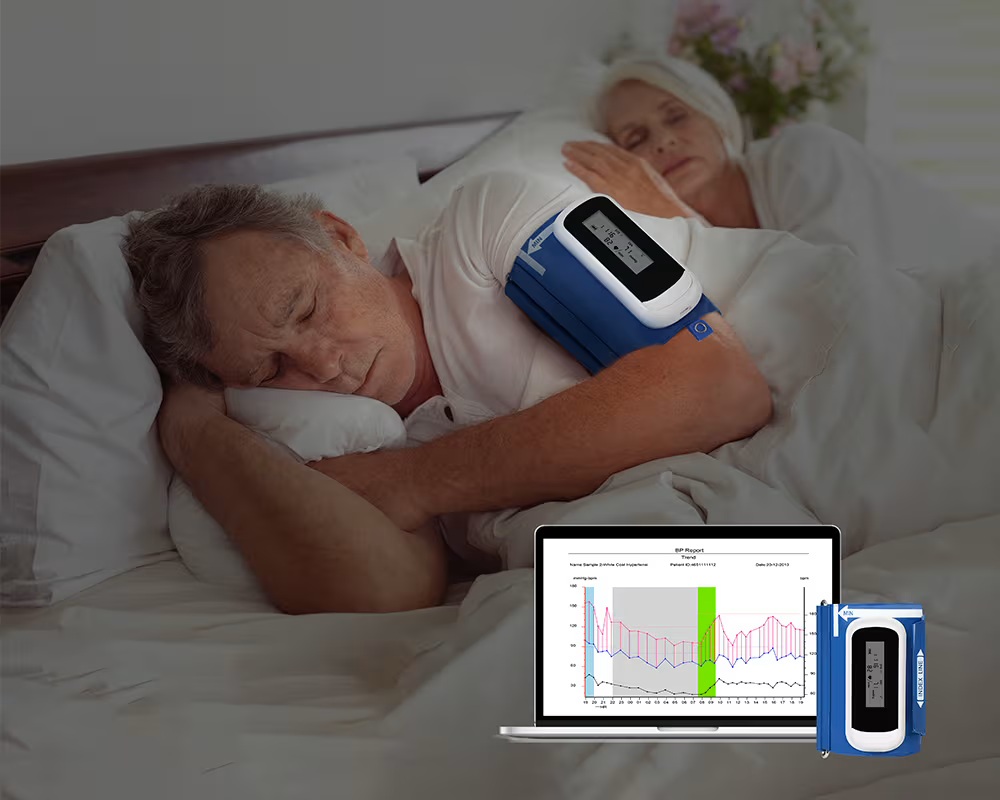
➤ Ambulatory Blood Pressure Monitoring (ABPM)
You wear a small cuff that automatically inflates every 15–30 minutes during the day and every 30–60 minutes at night. Over 24 hours, it builds a complete profile:
- Is your BP truly controlled?
- Do you have nocturnal hypertension (a major stroke risk)?
- Are you a “dipper” or “non-dipper” — and what does that mean for your heart?
- Do your medications wear off by evening?
ABPM is the gold standard for diagnosing white coat hypertension, masked hypertension, and resistant hypertension. It’s also used to fine-tune medications — because guessing is no longer good enough.
➤ Home Blood Pressure Monitoring (HBPM)
With today’s validated, Bluetooth-enabled cuffs, you can track your BP daily — and share trends directly with your care team. Consistency matters: same arm, same time, same seated position. Paired with a journal or app, it becomes a powerful tool for long-term management.
🧩 When Rhythm Meets Pressure — The Full Picture
The magic happens when we combine both.
Imagine a patient with episodes of dizziness. A rhythm monitor catches brief runs of atrial fibrillation — but the BP monitor shows those episodes coincide with sudden drops in pressure. Now we don’t just know what is happening — we understand why. Treatment becomes targeted: not just rate control, but volume management or medication adjustment.
Or consider the patient with resistant hypertension. ABPM reveals their BP never drops at night — and their Holter shows frequent PVCs. Is the arrhythmia causing the pressure surge? Or vice versa? The data guides the therapy.
🏁 The Bottom Line: Monitoring Is Prevention in Motion
Rhythm and blood pressure monitoring aren’t about fear — they’re about freedom.
Freedom from guessing.
Freedom from surprise hospitalizations.
Freedom from strokes, heart failure, or cardiac arrest that could have been prevented.
They turn invisible threats into visible data. They give your cardiologist the evidence they need to act — not react. And they give you peace of mind, knowing that even when you’re asleep, someone — or something — is watching over your heart.
📲 The Future Is Already Here
Today’s wearables — smartwatches with ECG and BP tracking — are just the beginning. Algorithms now detect AFib with startling accuracy. Cloud-based platforms alert doctors to dangerous trends before the patient even notices. Remote monitoring means fewer clinic visits and faster interventions.
But technology is only as good as the human behind it. These tools work best when paired with an attentive care team — and a patient who understands their value.
If your doctor has recommended monitoring — embrace it. Wear the device. Keep the cuff handy. Record your symptoms. Share your data.
Because in the quiet spaces between doctor visits… that’s where the real story of your heart is being written.
And now, you — and your care team — won’t miss a beat.
📌 Next time you feel that flutter, that headache, that unexplained fatigue — remember: it might not be “just stress.” It might be your heart asking to be heard. And thanks to rhythm and blood pressure monitoring, now it can be.